
A few weeks ago, I met an old friend who was explaining her polyamorous relationship. She spoke about boundaries, communication, freedom—the way her life had opened up since moving beyond traditional constraints. I listened carefully, asked questions, nodded at the right moments.
Later, walking home, I realized I hadn’t asked the one thing I really wanted to know: “But are you happy?”
That question has stayed with me. Not because I doubt her choices, but because it opened a larger one: beneath all our experiments with new ways of relating, are we actually learning how to love better? Or are we slowly losing the depth that love once carried?
The Changing Landscape of Relationships
Everywhere we look today, the language of relationships is shifting. Words like polyamory, situationships, and open relationships have entered everyday conversation. At the same time, traditional marriages continue to exist, though many appear strained, distant, or quietly unhappy.
It almost feels as if humanity is collectively experimenting with love—trying new arrangements, breaking old ones, searching for something that works.
For generations, monogamous marriage was considered the natural foundation of romantic life. Two people would meet, commit to each other, and build a shared future together. That model still exists, but it is no longer the only way.
Today, many people move through a series of shorter relationships. Others explore open partnerships or polyamory, where emotional bonds may extend beyond two individuals. Dating apps have created a world where romantic possibilities seem endless.
In theory, this expanding landscape offers more freedom than ever before. But with that freedom comes a quiet uncertainty. With so many ways of relating now available, many people seem less certain than ever about what love itself truly means.
The Hollow Side of Tradition
However, questioning modern relationship experiments should not mean blindly defending traditional ones. If we look honestly at many long-term relationships around us, it becomes clear that the institution of monogamy itself is not always a guarantee of love.
In many societies, including my own, countless couples remain together not because their relationship is alive and meaningful, but because separation carries social stigma. Family expectations, cultural traditions, financial dependence, and fear of judgment often keep people together long after emotional intimacy has faded.
In such relationships, love slowly gives way to routine. Two people may continue sharing a home, raising children, and performing the roles expected of them, while their emotional worlds drift quietly apart. Sometimes resentment builds. Sometimes silent loneliness replaces companionship. And in many cases, the appearance of commitment hides the absence of genuine connection.
When relationships exist only because of pressure or habit, monogamy itself loses its meaning. Recognizing this reality is important. Because if traditional relationships have failed many people, it becomes easier to understand why some individuals are now searching for alternative ways of loving.
The Appeal of Polyamory
Given the dissatisfaction many people feel within traditional relationships, it is not surprising that alternative models of love have begun to attract attention. Among them, polyamory has emerged as one of the most widely discussed.
For many people, polyamory represents an attempt to rethink the rules of romantic life. Instead of expecting two individuals to meet all of each other’s emotional and romantic needs, polyamorous relationships allow people to form connections with multiple partners openly and honestly. Advocates often describe it as a system based on transparency, communication, and personal freedom.
In theory, the appeal is understandable. If traditional monogamous relationships have sometimes been marked by secrecy, repression, or quiet dissatisfaction, then a model that emphasizes openness and choice can seem refreshing. Rather than hiding attraction or engaging in betrayal, people in polyamorous relationships attempt to acknowledge their desires openly.
But beneath the surface, this shift may also reflect a subtle psychological pattern. Expecting one person to fulfill all our emotional needs can feel overwhelming—for both individuals involved. When a relationship carries that weight, its loss can feel devastating.
In response, some people begin to distribute emotional connections across multiple partners. This can reduce dependency and make relationships feel less risky. But reducing vulnerability may also reduce the possibility of depth.
The Question of Depth
Yet even while acknowledging the appeal of new relationship models, an important question continues to trouble me. Can deep love truly exist when intimacy is divided among many partners?
Attraction to others is a natural part of being human. No relationship can erase the simple reality that we will occasionally notice beauty, intelligence, or charm in people beyond our partner. But attraction and devotion are not the same thing. Attraction is a natural impulse, but devotion is a conscious choice. The real question is not whether attraction exists, but how we choose to respond to it.
There is also a practical dimension that often goes unspoken. Every meaningful relationship requires care, communication, and emotional presence. Managing even a single deep partnership can be challenging. When several partners are involved, a large part of one’s emotional life can begin to revolve around coordinating feelings, expectations, and boundaries. In such situations, love becomes something that must be carefully managed rather than something that grows naturally.
Another concern lies in the nature of vulnerability. Deep emotional openness usually grows in an atmosphere of trust and emotional exclusivity. When a partner’s intimacy is shared across multiple relationships, some people may find it difficult to fully surrender emotionally, knowing that the same depth of connection exists elsewhere.
And finally, I sometimes wonder whether the growing interest in alternative relationship structures reflects not only freedom, but also a quiet discomfort with the demands of deep commitment. Genuine love asks a great deal from us. It asks patience, sacrifice, and the courage to face another human being with complete honesty over time. For some, multiplying relationships may feel easier than sustaining that kind of depth with one person.
These reflections do not lead me to judge those who choose different paths. But they do leave me with a lingering question: if love is something that grows through devotion, presence, and shared experience, can it truly flourish when our emotional attention is constantly divided?
The Deeper Problem: Confusion About Love Itself
After all this, I find myself returning to a more fundamental question. Perhaps the real issue with modern relationships is not their structure at all. The confusion may lie in our understanding of love itself.
Today we see endless debates about relationship models. Each side argues passionately about which structure is healthier, freer, or more honest.
But beneath these debates lies a quieter question that is rarely asked: do we actually understand love itself?
The philosopher Ayn Rand once wrote that before a person says “I love you,” they must first understand the word “I.” In other words, love begins with self-awareness.
Yet understanding the “I” is not easy. It requires the courage to examine one’s own fears, desires, values, and contradictions. It demands emotional maturity and honesty about who we truly are.
When individuals who are unclear about themselves enter relationships, love can easily become entangled with expectation, dependency, or escape. Instead of a meeting between two self-aware people, the relationship becomes a place where two uncertain identities search for completion through each other.
At this point, the debate between monogamy and polyamory becomes almost secondary. Love itself has not been fully understood.
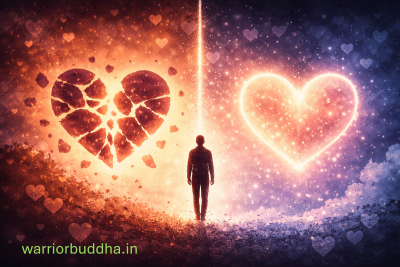
The Honesty Test
At this point, it is important to clarify something. My reflections on modern relationships are not meant to judge how others choose to live their lives. Human beings are shaped by their experiences, cultures, and personal journeys, and no single model of love can claim universal authority.
If two or more people truly find peace, honesty, and fulfillment in the way they structure their relationships, there is little reason for anyone outside that relationship to condemn them.
At the same time, another question remains worth asking. Are our modern experiments in relationships bringing us closer to emotional clarity, or are they sometimes ways of avoiding the deeper demands that love places on us?
Love requires a great deal of inner maturity. It asks us to understand ourselves, to confront our fears and insecurities, and to open ourselves to another person with patience and vulnerability over time. It is not always comfortable, and it cannot be sustained without effort.
And when individuals become deeply self-aware, they often discover that the kind of love they seek grows not through expansion, but through depth. A focused bond between two people—when it is alive, conscious, and freely chosen—can create a depth of understanding and intimacy that becomes difficult to replicate across multiple relationships at once.
The real shift in a relationship is not from one partner to many, but from dependency to self-sufficiency. A mature relationship is not built on completing each other, but on the ability to stand complete within oneself and still choose to share life with another.
In that sense, love is not about filling an inner emptiness, but expressing a fullness that already exists.
This does not mean that other paths are impossible. But it does shift the question. It is not simply about how many relationships we can maintain—but how deeply we are capable of loving.
A Quiet Question About Love
The real challenge of modern relationships is not choosing between monogamy and polyamory, tradition and experimentation, or commitment and freedom. The real challenge may be learning what love truly asks of us.
Love is not a casual arrangement or a fleeting experience. It is a force that asks for presence, devotion, and emotional courage. When two people meet with honesty and self-awareness, love can become something that slowly deepens over time—a bond where both individuals grow, challenge each other, and become better human beings together.
Such love does not necessarily promise permanence. Sometimes relationships end, and when they do, honesty may be more respectful than forcing something that has already faded. But while love is alive, it asks for attention and sincerity. It asks us to show up fully, not partially.
And perhaps what human beings ultimately seek in love is not variety, but a sense of wholeness—a connection where they feel deeply seen and reflected. When such a connection begins to emerge, the impulse to keep searching often grows quieter.
But when that sense of wholeness is absent, the search may continue across multiple relationships—not always out of freedom, but sometimes out of an underlying incompleteness.
So the question is not how many people we love, but whether our experience of love feels whole or fragmented.
In the end, every generation experiments with its own ways of loving. Our time is no different. New relationship models will continue to emerge, and people will keep searching for forms of connection that feel authentic to them.
Yet beneath all these experiments, one quiet question remains:
Are we truly learning how to love more deeply, or are we slowly losing the depth that love once carried?

 Musings of a Warrior Buddha
Leave a comment