
“Some people hear their own inner voices with great clearness. And they live by what they hear. Such people become crazy… or they become legends.”
— One Stab, Legends of the Fall
I first watched Legends of the Fall somewhere around 2008 or 2009, and it has stayed with me ever since. It didn’t feel like just another movie; it felt like something quietly entered my chest, sat there, and refused to leave. Over the years, it has become my most loved movie of all time. And at the center of it all stands Tristan Ludlow, a character I don’t just admire, but somehow feel deeply connected to. There is something about his wildness, his sensitivity, his tragic beauty, his inability to fully belong to the world, that speaks to a part of my own being. This is my small tribute to a character, a spirit, and a film that continues to live within me.
The Soul That Refuses to Belong
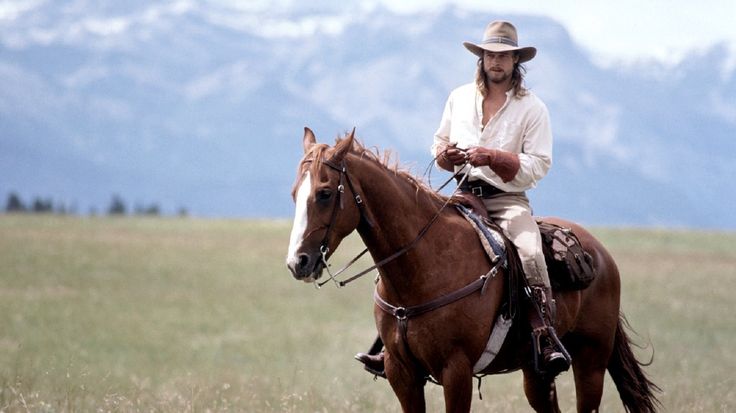
Tristan is not “rebellious” in a cinematic sense. He is something far rarer — a soul that cannot fully belong anywhere. He walks among people, loves them deeply, fights for them fiercely, yet there is always a part of him that remains untethered… like a piece of his existence forever claimed by the wilderness. From childhood, we see that he is not shaped by society as much as he is shaped by nature — by storms, horses, wind, mountains, danger, and instinct. He listens to something within him that most people either cannot hear, or are too afraid to obey.
Most of us learn to adjust, to bend ourselves to fit expectations, to quiet our inner voice in exchange for acceptance. Tristan cannot do that. His inner life is too loud, too honest, too relentless. And this refusal to belong makes him both magnetic and unsettling. People love him because he is real in a way very few are. He doesn’t wear masks, doesn’t pretend, doesn’t dilute himself to be “easier.” But the world doesn’t understand such people. Society doesn’t know what to do with a soul that won’t kneel, won’t settle, won’t shrink.
People like Tristan burn brighter than others, but they also burn themselves more deeply. Their freedom is beautiful. Their loneliness is inevitable. And perhaps that is why he feels so haunting.
Tristan represents that part of the human spirit that refuses to be domesticated. He is wild not in a reckless sense, but in a sacred one — like a river that cannot change its path just to make others comfortable. He may suffer, he may lose, he may break, but he never betrays his essence. And there is something deeply moving, deeply painful, and deeply human in that.
The Curse of Such Depth
There is a silent price to being a soul like Tristan. People like him don’t experience life in fragments; they feel everything completely. Love isn’t casual. Loss isn’t temporary. Grief doesn’t heal quickly. And when a person feels life with such intensity, existence itself becomes both a blessing and a burden.
That is why his grief over the loss of his brother doesn’t just break him; it tears open the very structure of his being. He doesn’t move on like others do, because he doesn’t know how to “move on.” He only knows how to live honestly, and honesty means accepting that some wounds do not fade, they simply become part of your soul.
Tristan’s emotional honesty isn’t gentle; it’s raw, untamed, and unconstrained. His presence brings warmth and truth, but it also brings storms. And storms, while breathtaking, are not easy to live with. That’s why such souls often end up tragic — because depth itself demands a price. To remain real when it would be easier to numb yourself is an act of courage… and also a source of endless pain. So he walks through life bleeding, yet refusing to stop feeling.
The Gift Within the Burden
Yet it would be unfair to see his depth only through tragedy. The very intensity that breaks him is also what makes him luminous. Tristan is capable of love that feels honest, connection that feels soulful, tenderness that isn’t hesitant or filtered. He doesn’t engage with people; he meets them — heart to heart, soul to soul. People are drawn to him because he makes them feel alive, seen, touched in a place beyond ego or pretense.
He brings warmth. He brings laughter. He brings life. He awakens something in others simply by being himself. Even his flaws feel painfully human. The lives he touches are marked forever, not because he is perfect, but because he is real. And realness is rare. Realness nourishes. Realness leaves a memory that does not fade. His depth may cost him peace, but it gifts the world beauty.
What Tristan Teaches Us About Being Human
Tristan teaches us that life is not meant to be survived mechanically — it is meant to be felt. That strength doesn’t mean being untouched; it often means breaking and still choosing to feel. He reminds us that vulnerability and wildness can coexist. That a man can carry storms inside him and still hold tenderness in his hands.
Tristan also touches that part within us that once felt deeply, burned passionately, loved fearlessly, before life taught us to become safer versions of ourselves. His tragedy is heartbreaking, but it is also strangely sacred.
Above all, he teaches us not to betray our essence. Not to shrink just to be “acceptable.” Not to silence the inner voice that calls us toward a deeper, more honest way of living. Even when it hurts. Even when it costs us.
Why the World Needs Souls Like Tristan
In a world that often values safety over sincerity, control over passion, and comfort over truth, we desperately need souls like Tristan. Yes, they come with storms. Yes, they complicate life. But they also bring fire, honesty, tenderness, meaning, and an intensity of love that makes existence richer. Without such people, the world may be more quieter — but it would also be emptier, colder, lifeless.
These are the hearts that remind us that depth is a blessing, that feeling deeply is not weakness, and that life becomes hollow when we stop living from the soul. They are living reminders that some spirits aren’t meant to be domesticated — they are meant to remind the world what being alive truly feels like.
For me, Tristan is not just a cinematic character. He is a symbol of that wild, untamed, painfully beautiful part of the human spirit that refuses to settle for anything less than authenticity. And this piece is my small tribute — not only to him, but to every real-life Tristan out there, whose very existence makes this world warmer, deeper, and infinitely more human. ❤️

 Musings of a Warrior Buddha
Leave a comment