
Introduction
There’s a strange journey many people make in life. As children or young adults, they fall in love with strength, independence, greatness — the heroes of books like The Fountainhead or Atlas Shrugged. But as the years go by, many turn away from what once inspired them, calling it “childish,” “impractical,” “immature”, or “unrealistic.”
Why does this happen? Why do some lose their admiration for greatness, while a rare few hold on to it?
This is the story of that choice — and of the silent battle every soul must fight.
1. The YouTube Story — A Familiar Journey
Recently, I came across a YouTube video of a woman reviewing The Fountainhead by Ayn Rand. She shared her personal story:
She first read The Fountainhead at sixteen and instantly fell in love with Howard Roark — his strength, his unshakable integrity, his quiet power. For years, it remained her favorite book.
Later in life, at twenty-two, she entered into a relationship with a man who was also an avid reader. She mentioned to him that The Fountainhead was her favorite, and lent him her copy to read. After reading it, her boyfriend returned, disappointed. He questioned how she could like such an “impractical” book.
This shook her. She decided to re-read the book with “more mature eyes.” And upon re-reading, she claimed she no longer found the same inspiration in Roark. She now felt the characters were “childish” and unrealistic. Dominique was “manipulated.” Roark was “too sure of himself.” Her admiration vanished.
She didn’t elaborate on specific points. But the shift was telling: what once stirred her soul now seemed naive.
2. The Nature of Beautiful Idealism
There’s a reason why The Fountainhead and books like it strike such a deep chord with young minds.
Youth, by its very nature, is the phase where the human soul is closest to its original flame — uncorrupted, unbent, still burning with the purity of its own desires.
When we are young, we do not yet fully see the weight of compromise. The world still feels like an open canvas — and we still believe we can paint our own picture upon it.
That’s why a figure like Howard Roark feels so powerful to a young person:
- His independence and courage speaks to their own hunger for freedom.
- His outlook towards life makes the world look beautiful.
- His indifference to society’s judgments echoes the secret rebellion within every thinking individual who refuses to be defined by others.
Youth sees the world in sharper contrasts: black or white, true or false, right or wrong.
And contrary to what cynics say, that is not childish. It is, in fact, the original state of human integrity.
The child who says:
“I will do what I believe is right, no matter what others say.”
is far closer to truth than the adult who says:
“I must be practical, I must compromise, I must adjust to what society expects.”
Ayn Rand once said that youth is when one’s “sense of life” is still unspoiled — when one still holds the implicit belief that life is meant to be lived by one’s own highest values, not by bending to others.
This is why heroes like Roark, Galt, Francisco, and Dominique — attract young readers:
Because they give shape to something already burning inside us:
The desire to live by one’s own soul.
3. The Corruption of Adulthood
Adulthood — for most people — is not the land of wisdom. It is the graveyard where their youthful ideals are slowly buried, one compromise at a time.
The world whispers to them:
“You must be practical.”
“You have to adjust.”
“That’s not how the real world works.”
“Don’t be so idealistic.”
And slowly, quietly, they begin to give in.
The first compromises feel small:
- Choosing a safe career over a passionate one.
- Staying silent when they should have spoken.
- Pretending to admire what they secretly despise, just to fit in.
But over time, these small compromises accumulate. And one day they wake up and find that inner voice gone — they lose connection with their souls.
What once was a young mind burning with dreams, turns into a cautious, defensive adult who calls his caution “maturity.”
And once they have surrendered enough, they develop a strange hostility toward those who still carry their youthful fire.
They begin to mock idealism, calling it childish.
They criticize those who refuse to compromise.
They tell the new generation:
“You’ll understand one day. You’ll grow up too.”
What they call growth is often nothing but slow surrender.
As Ayn Rand said:
“The easiest thing in the world is to sell your soul. The hardest is to keep it.”
Most adults do not outgrow their heroes because their heroes were false — but because they themselves have fallen short.
And once they have betrayed their souls, they no longer want to be reminded of what they once were.
That is why, when the woman in the YouTube video reread The Fountainhead, she didn’t see Roark as inspiring anymore — not because Roark had changed, but because she had changed.
She no longer had the courage to face the kind of life Roark represented. His existence became a mirror too painful to look into.
And so she did what many do: she called it “immature”, “childish”, “unrealistic” — not to judge Roark, but to protect herself from the guilt of what she had lost — and also from the immense sacrifice it required if Roark remained her ideal.
4. Why People Resent the Real-Life Hero
Perhaps the most painful truth is this:
The same people who admire heroes on screen and in books, often resent them in real life.
- They cheer for Roark in fiction — but mock the man who lives like Roark in reality.
- They admire Galt’s strike — but condemn those who walk away from corrupt systems.
- They clap for the hero on stage — but gossip behind the back of the one who dares stand alone.
Why?
Because real-life heroes are living proof that integrity is possible.
Their existence exposes others’ compromises.
It makes the weak uncomfortable.
It forces people to see what they could have been — had they not surrendered.
Instead of rising, most choose resentment.
Instead of learning, they attack.
Instead of admiring, they diminish.
This is the silent war that the strong must face every day.
5. The Rare Few Who Hold On To Their Heroes
Yet — there are always the rare few.
Those who never betray their heroes.
Who grow older, but never bitter.
Who mature — but never compromise their admiration for greatness.
For them, Roark remains real. Galt remains possible. Kira remains deeply understood.
These few have not conformed.
They have simply refused to surrender.
They understand what Ayn Rand meant when she said:
“The question isn’t who is going to let me; it’s who is going to stop me.”
These are the rare souls who carry the torch — quietly, consistently, regardless of how the world changes around them.
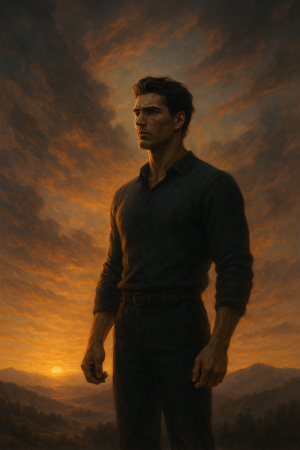
6. The Final Reflection: The Choice Each Soul Must Make
In the end, life always leads every man, every woman, to one simple question:
Will you keep your soul — or sell it?
And all people eventually fall into one of two camps:
1️⃣ Those who betray their heroes, and with it, betray themselves.
- Mocking what they once admired.
- Calling surrender “maturity.”
- Resenting those who stayed true.
2️⃣ And those who protect the flame.
- Quietly building their own strength.
- Honoring their earlier ideals.
- Growing without betrayal.
- Staying free — even if it costs them everything.
⚔️ A Note to The Reader
This blog you are reading is not just a reflection of literature.
It is a mirror held up to your own life.
The world may tempt you to call this idealism “childish.”
The world may mock you for believing in strength, independence, and integrity.
But understand this:
The world has no power over a man who refuses to sell his soul.
You may fall at times.
You may feel lonely.
But if you choose to rise again — and again — you are already among the rare few.
As Ayn Rand said:
“The world you desire can be won. It exists… it is real… it is possible… it’s yours.”

 Musings of a Warrior Buddha
Leave a comment