
The Lightbearer’s Journey: Leaving the Cave and Facing the Truth
The journey from illusion to truth has fascinated philosophers and seekers for centuries. Plato’s Allegory of the Cave is one of the most powerful metaphors for awakening — breaking free from deception, and confronting reality. It tells the story of a prisoner who escapes a dark cave, where shadows have been mistaken for reality, and steps into the light.
But what Plato’s allegory doesn’t fully explore is the harsh reality of this journey – the spiritual, mental, emotional, and even physical turmoil that awakening brings.
In this third part of the series, we will walk with the Lightbearer through this transformation — both within and outside.
1. The Slow Departure: A Struggle Between Worlds
Leaving the cave is not a singular event.
It is a process.
The Lightbearer does not simply wake up one day and step into the sun. He advances, retreats, doubts, trembles, tries again. He still feels connected to the cave — it has been his world, his truth. Accepting that everything he lived by was illusion is deeply destabilizing.
Some never make it through the passage.
Not everyone survives awakening.
Some are crushed by despair. Some break psychologically under the weight of painful realizations. Others glimpse truth… and run back because it is simply too much. The mind, the nervous system, the identity structure — all resist radical change.
Awakening is rarely glorious in the beginning.
It often feels like collapse.
- A woman realizes she has been emotionally manipulated for years.
- A soldier questions the war he once fought for.
- An artist sees how society crushes creativity for mediocrity.
Truth burns.
It does not simply “set free.” First, it destroys illusions, and with them, entire identities. Many experience grief, confusion, and even breakdown. This is not weakness — it is human limitation reacting to existential shock.
This is why awakening is not a one-time event, but an iterative struggle. The Lightbearer steps out, gets blinded, retreats, regathers strength, and tries again. Slowly, painfully, his vision begins to adjust.
And even then… the real battle has only begun.
2. Facing the Light: The Cost of Knowing Too Much
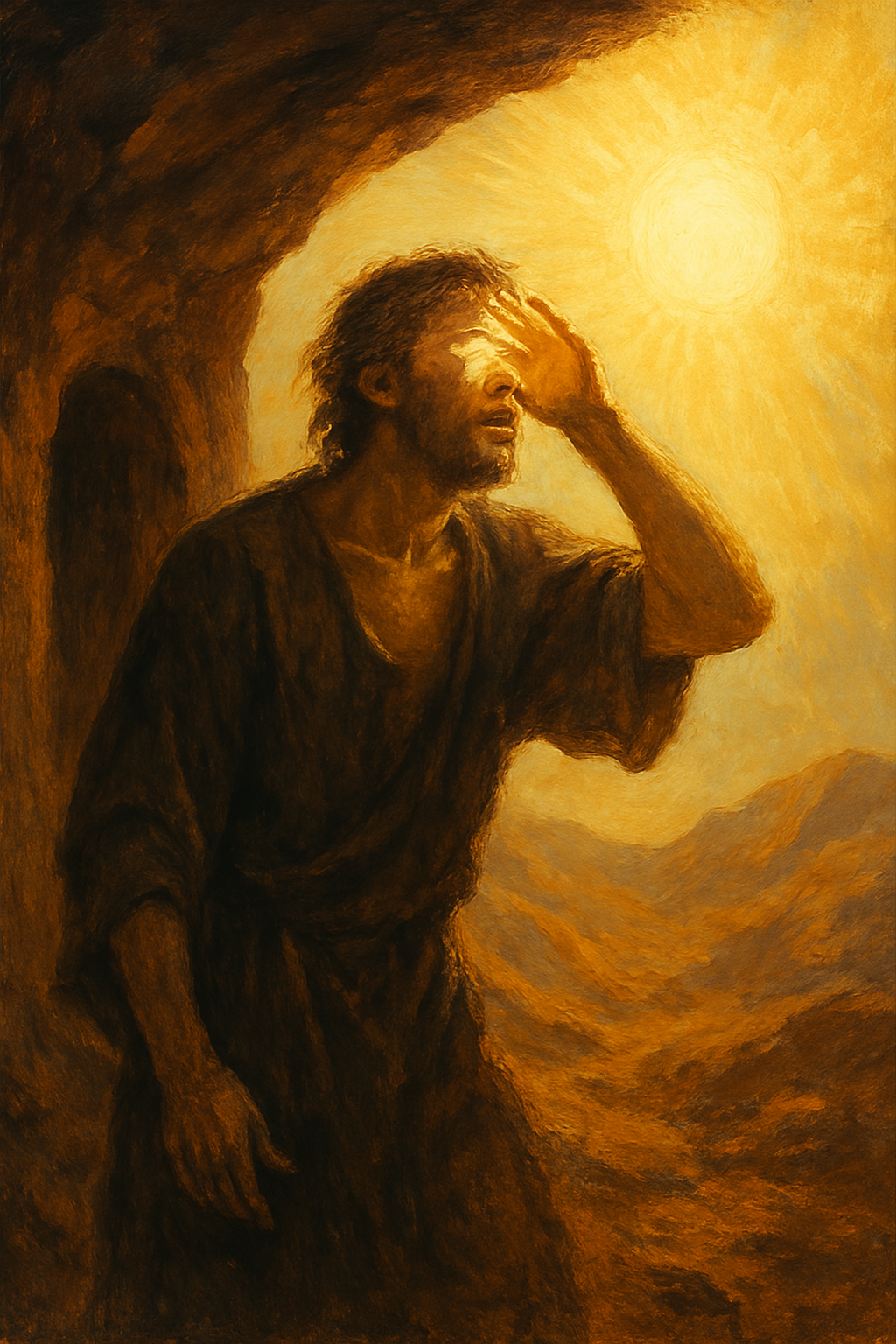
When the Lightbearer finally emerges, he is blinded.
The world outside is vast, raw, intense.
Freedom is not initially comforting — it is terrifying.
If one is not psychologically or spiritually prepared, the sudden collapse of all familiar certainties can leave the mind fragmented and the heart overwhelmed. Many great thinkers, artists, and seekers have walked this path — and some paid deeply for their sensitivity.
They were not “weak.”
They saw too much.
They felt too much.
Their nervous systems felt the weight of truth deeply. Their insights carried emotional gravity. They struggled not because awakening is inherently destructive, but because seeing deeply demands integration, and integration is not guaranteed.
Friedrich Nietzsche, for example, was a brilliant mind wrestling with extremely difficult existential realities, societal hypocrisy, moral collapse, and spiritual emptiness. His breakdown — whether it was illness, isolation, or the unbearable weight of his vision, stands as a reminder that great clarity does not always bring comfort. Awakening requires psychological grounding, emotional resilience, and human support.
Many artists, musicians, and philosophers who succumbed to addiction or despair were not fallen heroes. They were human beings facing overwhelming inner storms. Labeling them as “madmen,” “addicts,” or “suicides” oversimplifies their struggle. In truth, many of them were deeply sensitive souls, touched by realities most people never face, and burned by the intensity of what they carried. They were souls who needed compassion, safety, anchoring — sometimes more than the world was willing to offer.
3. Living in the Light: The Serenity of Truth
But not all collapse.
Some endure the blinding phase.
With time — sometimes years — the light ceases to assault and begins to reveal. The vastness that once terrified becomes sanctuary. The mind no longer clings to illusion. A deep, unshakable peace takes root within them – not the fleeting joy of momentary pleasures, but an internal stillness that comes from seeing things as they are.
This is the state of the true mystic, the enlightened philosopher, the artist who creates without seeking validation. They are no longer tormented by the fear of rejection or the loneliness of being misunderstood. Their connection with themselves deepens, and with it, a profound sense of completeness emerges. These are the ones who do not flee from the light but make it their home.
They may still feel the weight of their knowledge, but it no longer crushes them – it strengthens them. Having confronted the abyss and survived, they now stand at its edge, looking not with fear, but with understanding.
4. Two Paths in the Light
1️⃣ Those Who Return
Some feel compelled to go back — to teach, to share, to risk themselves again for the sake of others still trapped in shadows. This is the figure Plato spoke about. Their story belongs to the next chapter.
2️⃣ Those Who Do Not Return
Others choose differently.
Some Lightbearers, having glimpsed truth, do not return to the cave’s noise. Their departure is not arrogance, bitterness, or contempt for humanity. It is often self-preservation, clarity, and alignment with their deepest calling.
Their withdrawal is not always physical, sometimes it is an internal severance, a quiet retreat from the world of blind consensus. They live amongst society but do not belong to its illusions. Many sages, hermits, monks, contemplatives, and solitary artists belong here. They devote themselves to creation, meditation, research, truth-seeking, or inner evolution.
Ayn Rand’s “Atlantis” in Atlas Shrugged expresses one form of this retreat — individuals refusing to waste life-energy arguing with systems built on decay. But not all withdrawal is rebellion or superiority. Sometimes it is tenderness toward the self. Sometimes it is choosing creation over conflict. Sometimes it is the only way to stay sane, alive, authentic.
Nikola Tesla immersed himself in solitude, not because he despised society, but because his mind lived elsewhere. Emily Dickinson retreated inward, not out of disdain, but because her soul needed that space to bloom.
Their withdrawal is not escape.
It is choosing where to breathe.
Final Thoughts: The Path of the Lightbearer
The journey out of the cave is not glamorous.
It is painful, uncertain, lonely, and deeply demanding.
Some awaken and break.
Some awaken and withdraw.
Some awaken and return to help.
But those who carry the light are the ones who have kept this world alive. The very act of walking on this journey is the most beautiful and profound experience a human can have. The destination matters less than the courage it takes to walk the path.
So take a moment to reflect – Where are you on this journey? Are you still in the cave? Stepping out? Struggling with the light? Or have you found your place beyond the cave’s walls?
Whatever stage you are in, know this:
Awakening is not about becoming superior.
It is not about mythic glory.
It is not about reaching a destination.
It is about remaining honest with yourself, evolving, integrating, staying human, and refusing to betray your own awareness.
Even when the world makes it hard.
Next Chapter: The Lightbearers Who Return
Not all who step into the light remain there. Some feel a calling to return — to share what they have seen, to confront illusions, to risk misunderstanding and rejection.
But the cave does not welcome truth.
It resists it.
In the next chapter, we will follow the Lightbearer back into the darkness. Why does he return? What compels him? And what awaits him there — curiosity, hostility, ridicule… or silent transformation?
The story continues.

 Musings of a Warrior Buddha
Leave a comment